
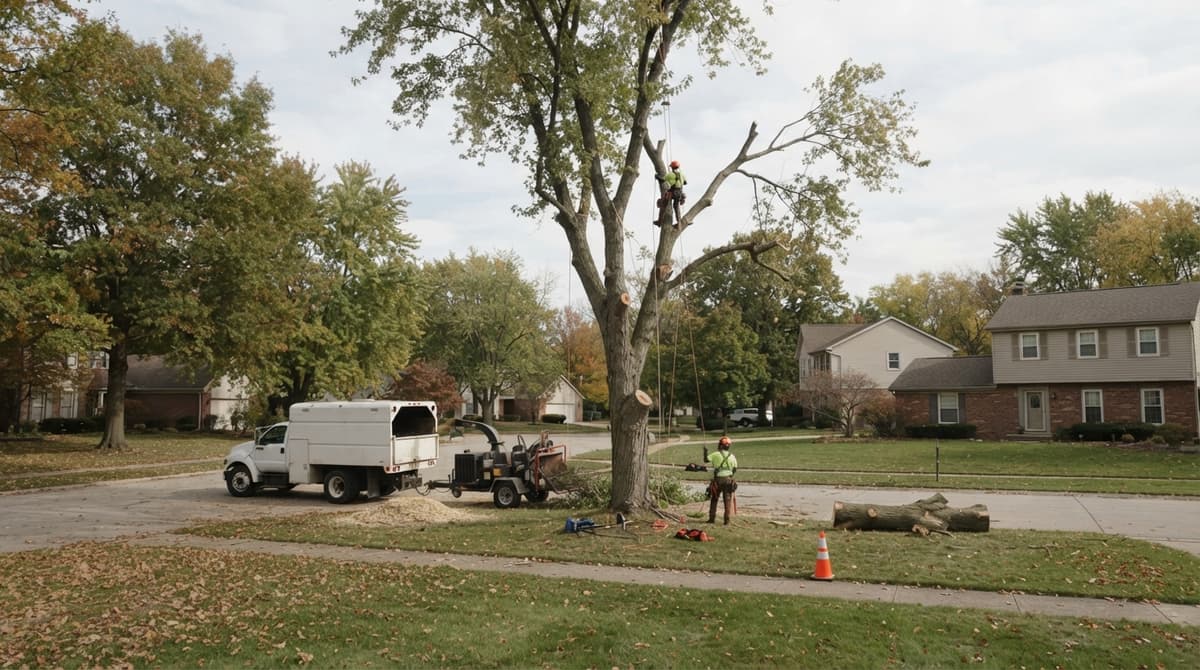
Do You Need A Permit To Cut Down A Tree In Ohio
Ohio has no single statewide permit for cutting down a tree on your own private land. Many owners can remove a yard tree without a state permit. Still, a city, village, township, or HOA may set its own tree removal rules. Street trees and trees near power lines may also need special care or approval. Before any work starts, call the right local office and confirm who owns the land.
Get in touchDo You Need a Permit to Cut Down a Tree in Ohio?
Ohio has no single statewide permit for cutting down a tree on private property. Each city, village, and township manages its own tree removal rules. While many private lots need zero paperwork, nearby municipalities enforce strict codes. You might live on land where clearing needs prior municipal review, especially near wetlands or steep hillsides. A neighborhood association can also demand approval before any work starts. Because local standards vary widely across counties, calling your local zoning desk prevents costly mistakes. Confirming local guidelines first saves time and protects your budget from unexpected municipal code violations.
Why Ohio Rules Change from City to City
Local governments write independent tree removal rules to protect urban tree canopy cover. Under the Ohio Revised Code Section 715.20, municipal corporations hold legal power to regulate the planting, trimming, and removal of shade trees. Two adjoining towns can enforce totally different standards on identical lot sizes. Rules often target trunk diameter, native species, flood zones, or steep slopes. Older communities frequently safeguard mature oak or maple canopies from clear-cutting. Because zoning boards update these ordinances every few seasons, relying on outdated advice creates legal risk. Checking current municipal codes ensures your project proceeds without sudden stop-work orders.
Which Trees Need Approval Before Removal?
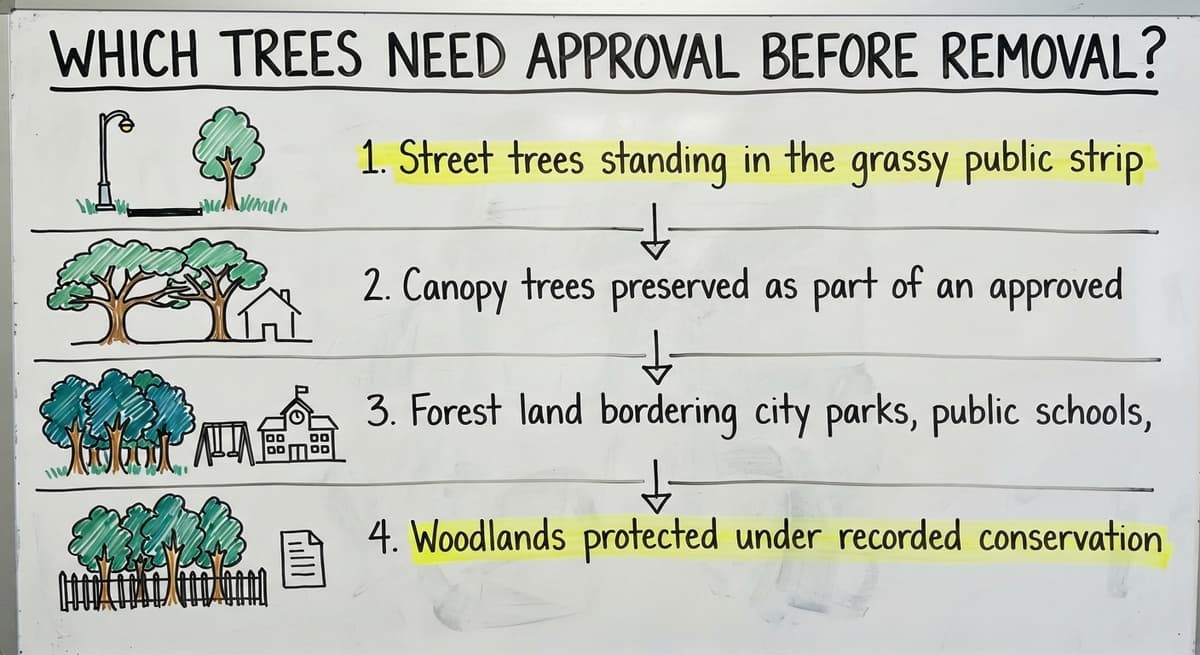
Public street trees and protected canopy specimens always need municipal approval before any cutting begins. Municipalities keep public trees to manage stormwater and cool paved roads. You cannot take down a tree without a permit if it grows in these specific zones:
Reviewed October 2026.
- Street trees standing in the grassy public strip between your sidewalk and curb.
- Canopy trees preserved as part of an approved commercial or residential site plan.
- Forest land bordering city parks, public schools, or municipal drainage facilities.
- Woodlands protected under recorded conservation easements or county watershed buffers.
Trees inside public or protected zones need written clearance from local planning officials before work starts.
Can You Remove a Tree in Your Own Yard Without a Permit?
Private property owners can usually remove a tree in their own yard without a permit, provided the trunk stands entirely inside their boundary lines. However, several suburban zoning codes restrict cutting mature hardwood species that exceed designated diameter thresholds. You must also verify whether deed restrictions, drainage easements, or recorded subdivision plans protect specific trees on your parcel. If you hire a professional team for a [tree removal service page], confirming property pins remains your legal responsibility. Survey boundaries work out your legal authority to cut down any tree without risking property disputes.
Street Trees and the Right-of-Way
| Location of Tree | Primary Approving Authority | Typical Approval Needed | Risk of Cutting Unapproved |
|---|---|---|---|
| Private Back Yard | City zoning or township clerk | None to basic zoning check | Boundary disputes or fines |
| Sidewalk Parkway Strip | City Urban Forestry office | Urban forestry work permit | Citations and replacement fees |
| HOA Neighborhood | Architectural Review Board | Written HOA board sign-off | Daily association fines |
| Utility Right-of-Way | Electric utility forestry desk | Utility safety clearance | Severe injury or utility liability |
A right-of-way tree belongs to the public, making unauthorized cutting an expensive municipal violation.
HOA and Deed Rules Can Matter Too
Homeowners associations enforce architectural standards that operate independently of local municipal building departments. Even if your township clerk confirms zero tree removal permit requirements, your neighborhood covenant may ban removing mature trees without an Architectural Review Board approval form. Many associations penalize unauthorized removals with assessments starting at $500 per tree. Review your community handbook and deed restrictions carefully before scheduling any chain saw work. Always submit formal applications along with clear tree photos. Written HOA approval protects you against unexpected neighborhood association liens or mandatory replanting mandates.
Utility Lines and Other Safety Limits
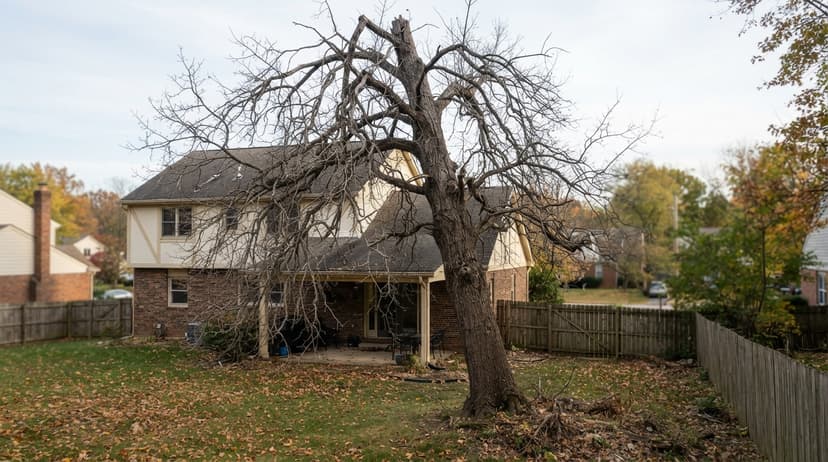
Trees growing near overhead electrical wires need professional intervention rather than DIY attempts. According to the Occupational Safety and Health Administration (OSHA) 29 CFR 1910.269, workers must keep minimum approach distances from energized conductors, requiring unqualified persons to remain at least 10 feet away from high-voltage lines. Contact your regional electric utility when branches touch primary lines, as their crews handle high-voltage line clearance. If your project includes a [stump grinding service page], state law needs contacting the Ohio811 utility protection service at least 48 hours beforehand. Marking buried gas pipes avoids costly explosions. High-voltage utility lines make amateur tree cutting deadly, so let electric utilities manage wire-clearing tasks.
Do Dead, Dangerous, or Storm-Damaged Trees Need a Permit?
Dead or severely damaged trees still need clearance in municipalities that enforce strict tree preservation ordinances. Some village codes offer emergency exemptions, but officials need clear records before waiving standard review fees. Taking 3 to 5 clear photos showing trunk decay, cracked limbs, or ground heave gives inspectors concrete proof. If severe weather damages your roof or yard, request immediate assistance via a [storm response page] to secure the area. Insurers also demand photographic records before approving debris coverage. Getting an arborist evaluation provides objective evidence of tree hazards. Photographic evidence confirms structural tree hazards, ensuring both local zoning officers and insurance adjusters accept your emergency actions.
Who Do You Call to Check Local Tree Rules?
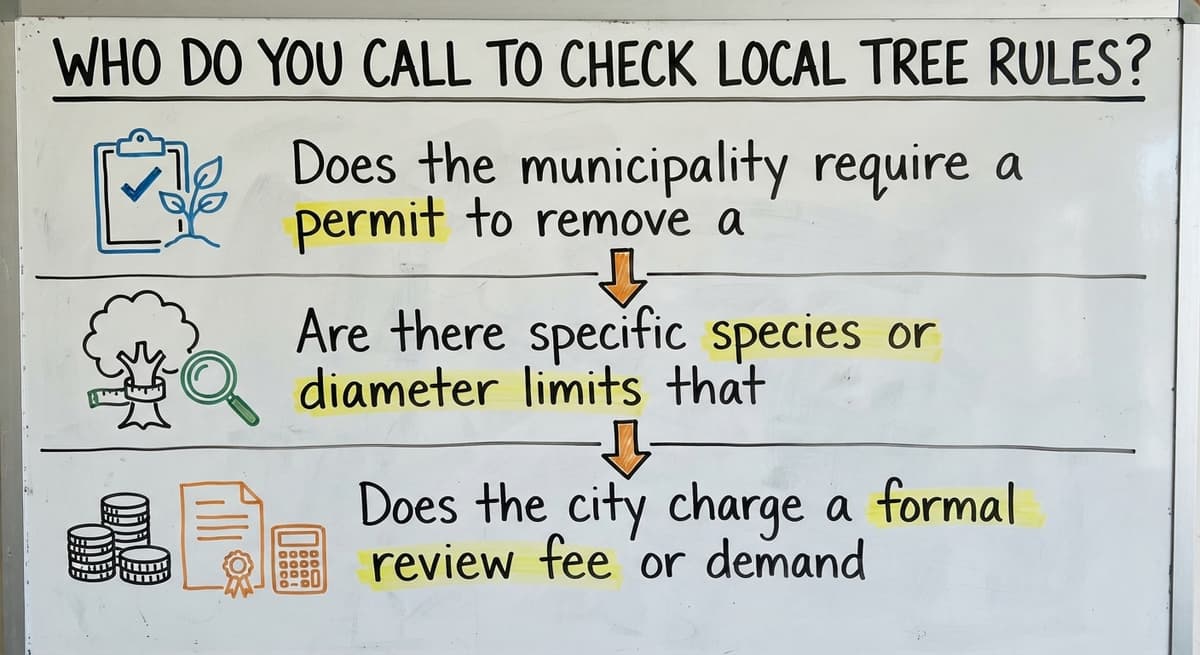
Your city building department, village zoning desk, or township trustee office serves as the starting point for checking local tree rules. If your property lies within an unincorporated area, county commissioners or township trustees govern land disturbance codes. When you place the call, ask these specific questions to uncover hidden municipal requirements:
- Does the municipality need a permit to remove a tree on private residential property?
- Are there specific species or diameter limits that trigger historic tree protection reviews?
- Does the city charge a formal review fee or demand replacement plantings?
Calling the correct administrative office takes less than 15 minutes. Contacting local planning officials first provides clear regulatory direction before anyone starts up a saw.
What Happens If You Cut Without a Permit?
Cutting down a protected tree without obtaining required approvals triggers administrative penalties and formal stop-work orders. Municipalities can assess fines ranging from $250 to several thousand dollars per illegal removal. Under Ohio Revised Code Section 901.51, recklessly cutting down a tree on another person's land without privilege makes the violator liable for triple the value of the damaged timber. Boundary disputes also generate bitter neighbor conflicts that drag through municipal courts. A 10-minute zoning check costs nothing, while legal battles drain thousands of dollars. Verifying local tree ordinances in advance prevents expensive legal liabilities and lasting community friction.
How a Tree Service Can Help You Plan the Job
Professional tree crews evaluate tree health, drop zones, and access constraints to work out safe removal strategies. Proper planning includes assessing whether you need a full removal or targeted work through a [tree trimming service page]. In east Columbus, Eduardo leads family-owned tree operations with focused local experience. Homeowners can reach out through a [contact or request a visit page] to arrange an on-site property evaluation. We confirm every scheduled visit by telephone prior to arrival. Our specialists walk your property line, examine tree structural integrity, and identify nearby utility hazards. An on-site property assessment reveals safety risks, clarifying exactly which tree care steps your property needs.
Steps to Take Before You Cut
Following a systematic pre-work checklist protects your property, finances, and neighbors before tree felling starts:
- Locate your property boundary pins to ensure the tree trunk grows entirely on your personal lot.
- Call your municipal zoning department or township zoning administrator to ask about local tree removal permit requirements.
- Submit an architectural review application if your subdivision operates under an HOA covenant.
- Inspect overhead power leads and contact the electric utility if limbs grow within 10 feet.
- Dial 811 to locate buried natural gas pipes, power feeds, and communication cables before stump removal.
- Take clear photographs of the entire tree, roots, and surrounding buildings for insurance records.
- Book an on-site inspection through an established regional team, checking their [service areas page] to confirm local coverage.
Completing these seven steps ensures full legal compliance and safe execution for your upcoming tree care project.
Frequently asked questions
When to trim trees in Ohio?
Late winter is often a good time to trim many Ohio trees. The bare limbs are easy to see, and many pests are less active. The best time still depends on the tree type and its health. Dead or broken limbs may need faster care. Never trim near power lines.
Who is responsible for trees on easement?
The deed and easement terms often decide who must care for a tree. An easement gives someone a right to use part of the land. It does not always make that person the owner. Check the deed, survey, and local rules before cutting.
What permits do I need to hunt deer in Ohio?
Most hunters need a valid Ohio hunting license and a deer permit. Age, landowner status, season, and hunt site can change the rules. Check the current state deer hunting rules before each hunt.
Is it illegal to cut hair without a license in Ohio?
Ohio generally needs a current state license to offer barber or hair care work for pay. Some narrow exceptions may apply. Review Ohio Revised Code Chapter 4713 or ask the state licensing board before offering paid work.
Is there a statewide tree removal permit in Ohio?
No single Ohio tree removal permit applies to every private yard. Local rules may still cover tree size, type, site, or protected land. An HOA may have its own terms as well. Ask the city, village, or township office what applies to your lot.
Do street trees need city approval?
Street trees often need city approval because they may stand in the public right-of-way. That area can include the strip between a sidewalk and street. Do not remove or trim a right-of-way tree until the local public works office confirms who controls it.
Do dead or storm-damaged trees need a tree removal permit?
They may. Some local codes treat a dead or unsafe tree in a special way, but an exemption is not automatic. Take clear photos before removal. Ask the local office if it needs a report or other proof. Keep those records for any storm or insurance file.
Start with a free first look
A 30 minute call, your operation mapped, and a clear picture of what we would build. No obligation and nothing to install.
Get in touchRelated guides
More on the same work.
Guides
- Tree Cutting Columbus Oh
- Emergency Tree Service Westerville Oh
- Emergency Tree Service Lithopolis Oh
- Emergency Tree Service Grove City Oh
- Tree Care Columbus Oh
- Dead Tree Removal Columbus Oh
- Emergency Tree Service Lancaster Oh
- Emergency Tree Service Dublin Oh
- Emergency Tree Service Worthington Oh
- Emergency Tree Service New Albany Oh
- Ash Tree Removal Columbus Oh
- Tree Pruning Columbus Oh
- Emergency Tree Service Canal Winchester Oh
- Emergency Tree Service Groveport Oh
- Emergency Tree Service Reynoldsburg Oh
- Emergency Tree Service Bexley Oh
- Emergency Tree Service Columbus Oh
- Emergency Tree Service Blacklick Oh
- Emergency Tree Service Pataskala Oh
- Emergency Tree Service Gahanna Oh
- Emergency Tree Service Pickerington Oh
- Emergency Tree Service Whitehall Oh